

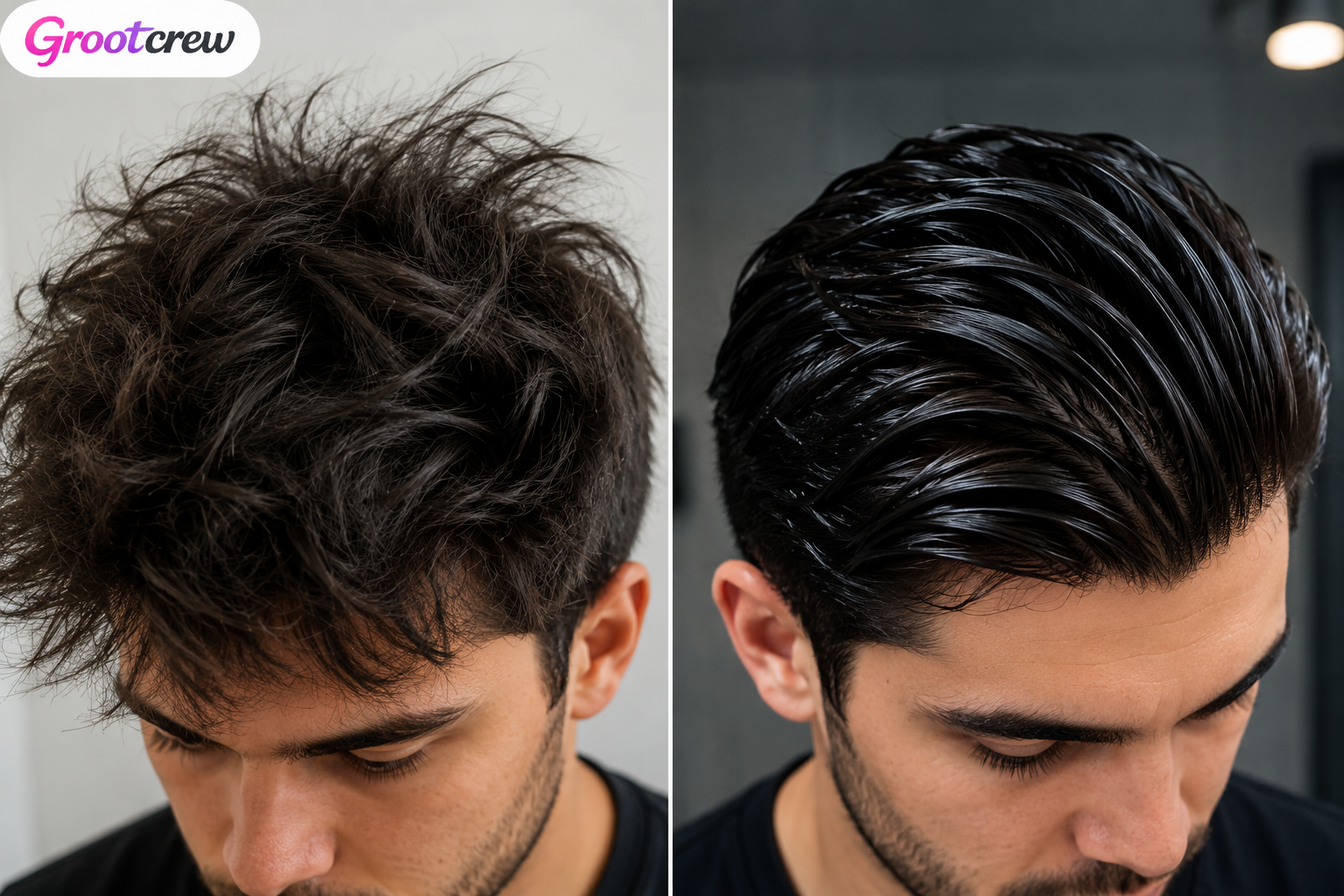
Frizzy hair can be tricky to manage. Add too little product and the frizz stays. Add too much, and your hair looks flat, oily, and heavy.
The best way to control frizz without making hair greasy is to use lightweight products, apply them only where needed, and avoid habits that dry out or damage the hair.
How to Fix Frizzy Hair Without Making It Greasy
Start by focusing moisture on the mid-lengths and ends rather than the scalp. Your roots already receive natural oils, while the ends are usually drier and more prone to frizz.
A simple routine can make a noticeable difference:
- Wash with a gentle shampoo.
- Apply conditioner from the mid-lengths down.
- Dry hair with a microfiber towel or soft T-shirt.
- Use a lightweight leave-in conditioner.
- Apply one or two drops of anti-frizz serum.
- Keep oils and heavy creams away from the roots.
Always begin with a small amount of product. You can add more if needed, but removing excess product usually means washing your hair again.
Why Hair Becomes Frizzy
Frizz often appears when the outer layer of the hair becomes rough or raised. This allows moisture from the air to enter the strands, making them swell and lose their smooth shape.
Common causes include:
- Lack of moisture
- Humid weather
- Heat styling
- Bleaching or coloring
- Rough towel-drying
- Brushing too aggressively
- Product buildup
- Split or damaged ends
It is also possible to have oily roots and dry, frizzy ends at the same time. In that case, applying oil all over the hair may make the roots greasy without properly helping the dry areas.
Wash Your Hair Gently
Choose a mild shampoo that removes oil and product buildup without leaving the hair feeling rough.
Apply shampoo mainly to the scalp. There is no need to scrub the ends, as the lather will clean them while you rinse.
Use lukewarm water instead of very hot water. Excessive heat can dry out the hair and make frizz more noticeable.
If your hair feels waxy, coated, or flat, use a clarifying shampoo occasionally. Avoid using it too often because it may strip moisture from the hair.
Condition Without Weighing Hair Down
Skipping conditioner can make frizz worse. Conditioner helps soften the strands, reduce tangles, and smooth the hair cuticle.
Apply it from the mid-lengths to the ends and keep it away from the scalp unless the product is designed for root application.
Fine hair usually needs only a small amount. Thick, curly, or coarse hair may need more, but it is still best to start lightly.
Rinse thoroughly so the hair feels soft but not coated.
Dry Hair Without Creating More Frizz
Rubbing wet hair with a rough bath towel can cause breakage and flyaways.
Instead, gently squeeze out excess water with:
- A microfiber towel
- A soft cotton T-shirt
- A smooth hair wrap
Avoid twisting the hair tightly. Once it is damp rather than dripping wet, apply your styling products.
Use Leave-In Products Correctly
Product choice and application make a big difference.
Leave-In Conditioner
A lightweight leave-in spray works well for fine, straight, or easily weighed-down hair. Thick or curly hair may benefit from a light cream.
Apply it mainly to the lengths and ends.
Anti-Frizz Serum
Serum can smooth flyaways, add shine, and protect the hair from humidity.
Start with one or two drops. Rub the serum between your palms, then apply it to the ends and mid-lengths. Use only the small amount left on your hands to smooth the outer layer.
Hair Oil
Hair oil can soften dry ends, but too much can quickly make hair look greasy.
Use one drop at first and press it into the ends. Fine hair may not need oil if a serum already provides enough smoothness.
Apply Products to Damp Hair
Damp hair is usually the best stage for applying leave-in conditioner and serum.
If the hair is soaking wet, products may become too diluted. If it is completely dry, heavy formulas may sit on the surface and look oily.
Applying products to damp hair helps them spread more evenly, allowing you to use less.
Choose Lightweight Anti-Frizz Ingredients
Look for products containing ingredients such as:
- Panthenol
- Aloe vera
- Glycerin
- Hydrolyzed proteins
- Argan oil
- Jojoba oil
- Squalane
- Lightweight silicones
Silicones can help smooth the hair, reduce friction, and improve shine. They are not automatically harmful, but proper washing is important to prevent buildup.
Protein ingredients may help damaged hair feel stronger, although using too much protein can make some hair types feel stiff or dry.
Adjust the Routine for Your Hair Type
Fine Hair
Choose leave-in sprays, lightweight serums, mousse, and light conditioners. Avoid thick butters and heavy oils.
Thick or Coarse Hair
Use a moisturizing leave-in cream followed by a small amount of serum. Apply products in sections for even coverage.
Wavy Hair
Scrunch a lightweight mousse or gel into damp hair. Avoid brushing once the hair is dry.
Curly Hair
Apply leave-in conditioner and gel in sections. Allow the hair to dry fully before touching or scrunching it.
Straight Hair
Keep conditioner and serum below the ears. Straight hair can show greasiness quickly, so use very small amounts.
Quick Ways to Tame Frizz Without Washing
When frizz appears between washes, lightly mist the hair with water and smooth or scrunch it back into place.
You can also apply one drop of serum to your palms, rub your hands together until they feel almost dry, and gently smooth the frizzy areas.
For small flyaways around the hairline, use a clean toothbrush or styling brush with a tiny amount of gel or hairspray.
If the roots are oily, use dry shampoo only on the scalp. Apply serum separately to the dry ends.
Prevent Frizz While Sleeping
Nighttime friction can cause tangles, flyaways, and breakage.
A silk or satin pillowcase may help reduce friction. You can also loosely braid the hair or tie it with a soft scrunchie.
Avoid sleeping with soaking-wet hair, as wet strands are more fragile and likely to become tangled.
Habits That Make Frizz Worse
Try to avoid:
- Applying oil to the roots
- Using too much serum
- Layering several heavy products
- Brushing curly or wavy hair when dry
- Washing with very hot water
- Rubbing hair with a rough towel
- Skipping heat protectant
- Straightening damp hair
- Touching the hair repeatedly
- Ignoring damaged ends
If your hair becomes greasy after styling, reduce the amount of product or switch to a lighter formula rather than skipping moisture completely.
A Simple Anti-Frizz Routine
On wash days, shampoo the scalp, condition the lengths, blot the hair gently, and apply a lightweight leave-in product. Finish with one or two drops of serum on the ends.
Between washes, refresh frizzy areas with a light water mist and a tiny amount of serum. Use dry shampoo only on oily roots.
If your hair suddenly becomes extremely frizzy, breaks easily, feels weak after bleaching, or changes texture along with scalp irritation or hair loss, speak with a hairstylist or dermatologist.