

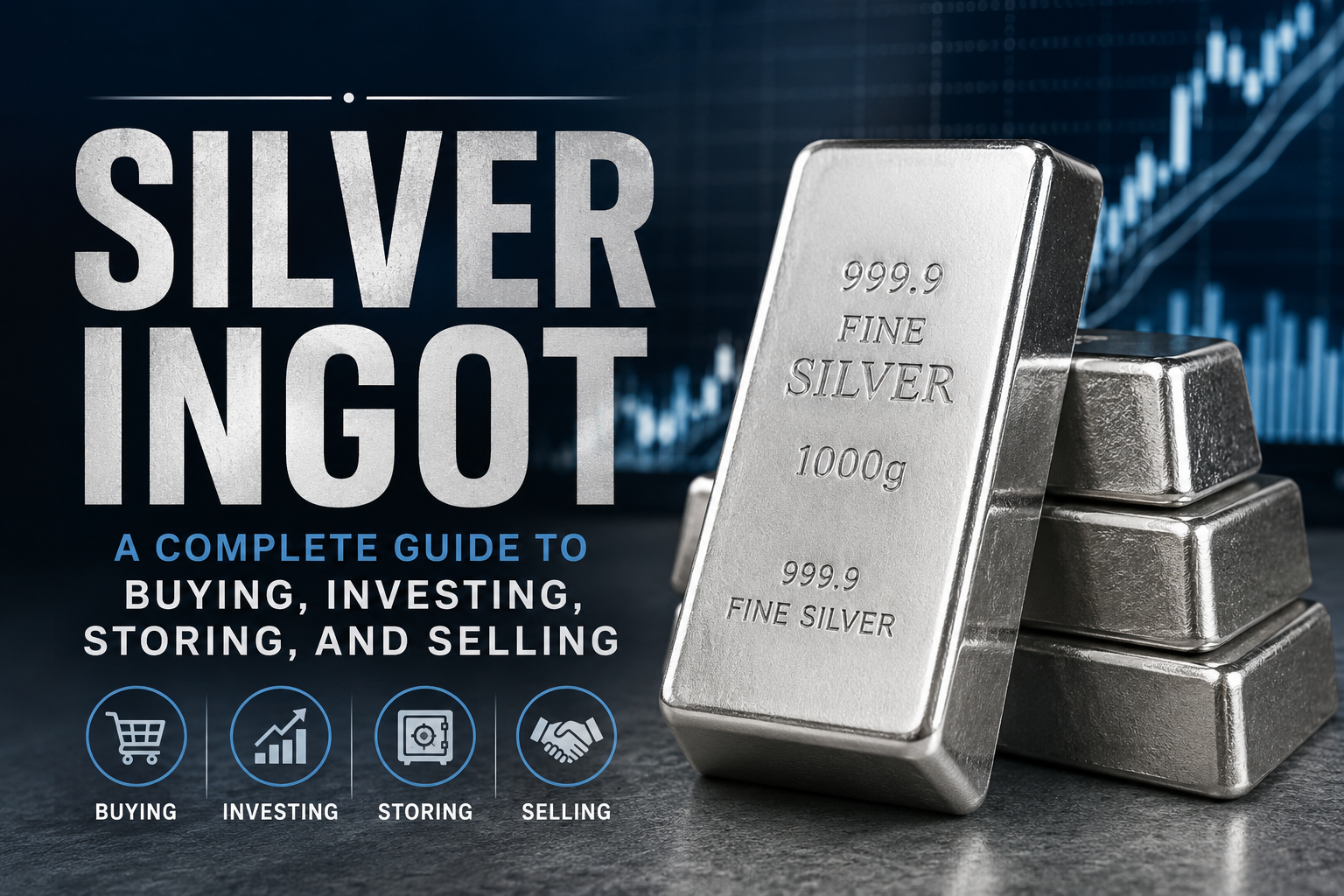
Silver ingots have long appealed to people who want to own precious metals in a simple, tangible form. Unlike digital investments that exist only inside an account, a silver ingot is something you can physically hold, store, insure, and sell when the time is right.
That does not mean buying silver is as easy as choosing the shiniest bar on a dealer’s website. Weight, purity, manufacturing style, dealer premiums, authenticity, storage costs, and resale demand can all affect whether a purchase makes sense.
For someone exploring silver ingot investment for the first time, the number of choices may feel overwhelming. There are small minted bars, heavy cast ingots, vintage pieces, generic bullion products, government-issued coins, privately produced rounds, and collectible designs. Understanding how each option works makes it easier to spend wisely and avoid common mistakes.
What Is a Silver Ingot?
A silver ingot is a refined piece of silver formed into a specific shape and weight. It may be created by pouring molten silver into a mould or by pressing and cutting refined metal into a polished bar.
Most investment-grade silver ingots display several important details directly on the surface or packaging:
- The weight of the ingot
- Its silver purity
- The name or logo of the mint
- A serial number on certain products
- An assay mark or authenticity information
The terms silver ingot and silver bar are often used interchangeably. Some sellers use “ingot” to describe poured or cast products with a rougher finish, while “bar” may refer to neatly pressed or machine-finished pieces. There is no universal rule, so buyers should pay more attention to weight, purity, manufacturer, and authenticity than to the product name.
How Silver Ingots Are Made
The process begins with silver that has been refined to remove unwanted materials. Once the desired purity is reached, the metal is melted and shaped.
Cast silver ingots are produced by pouring molten silver into moulds. After cooling, they may be weighed, stamped, polished lightly, and inspected. Small variations in texture, shape, or surface pattern are common because the metal settles differently in each mould.
Minted silver bars go through a more controlled process. Silver sheets are rolled to a precise thickness, cut into uniform pieces, and pressed with detailed designs. These bars often have sharper edges, smooth surfaces, decorative patterns, and sealed packaging.
Neither style is automatically better. Cast ingots often appeal to buyers who prefer a traditional appearance and lower production premium. Minted bars may suit people who care about presentation, detailed branding, or easier visual recognition.
Silver Ingot Sizes, Weights, and Purity
Silver ingots are sold in a wide range of sizes. This allows someone with a modest budget to begin with a small piece while larger investors can purchase heavier bars with lower premiums per ounce.
Common sizes include:
- 1 gram
- 5 grams
- 10 grams
- 1 troy ounce
- 5 troy ounces
- 10 troy ounces
- 100 troy ounces
- 1 kilogram
Precious metals are normally measured in troy ounces rather than the standard ounces used for food and household items. One troy ounce weighs approximately 31.1 grams, while a standard ounce weighs approximately 28.35 grams. This difference is important when comparing silver ingot prices.
Understanding Silver Purity
Purity tells you how much of the ingot is actual silver. A product marked .999 fine silver contains 99.9% silver. A bar marked .9999 fine silver contains 99.99% silver.
Most bullion-grade silver ingots are made from .999 or .9999 fine silver. Sterling silver, which is usually marked .925, contains 92.5% silver and a small amount of other metal. Sterling silver is widely used in jewellery, cutlery, and decorative objects, but it is less common in modern investment ingots.
Purity matters because the value of a silver ingot is tied to the quantity of pure silver it contains. A heavier item made from lower-purity metal may contain less actual silver than a smaller high-purity product.
Small or Large: Which Size Makes More Sense?
Small silver ingots are often easier to buy gradually. They can also be sold one at a time, giving the owner more flexibility. The main drawback is that small products usually cost more per ounce because manufacturing, packaging, and dealer expenses are spread across less silver.
Larger ingots often carry lower premiums per ounce. They are useful for investors who want to accumulate more metal without filling their storage space with dozens of small pieces. However, they require a larger upfront payment and cannot be divided when it is time to sell.
Someone who owns a single 100-ounce bar must sell the whole bar. A person holding ten 10-ounce bars can sell only part of the collection if cash is needed.
Silver Ingot vs Silver Bar: Is There a Real Difference?
In everyday bullion trading, a silver ingot and a silver bar usually refer to the same basic product: a measured piece of refined silver.
The distinction is often related to appearance rather than metal content. An ingot may have a poured, rugged finish, while a minted bar may look smooth and precise. Dealers and manufacturers do not always follow the same naming system, so the label alone should not guide a purchase.
Instead, compare the following:
- Fine silver weight
- Purity level
- Premium over the silver spot price
- Mint or refinery reputation
- Product dimensions
- Packaging and certification
- Resale demand
A plain generic silver bar can sometimes offer better value than an elaborately packaged ingot. On the other hand, a recognisable brand may be easier to verify and sell.
Silver Ingots vs Coins and Rounds
Physical silver comes in several forms, and each one has a different appeal.
Silver Ingots vs Silver Coins
Government mints issue silver coins with an official face value. The face value is usually much lower than the value of the silver inside the coin, but legal-tender status can make these products widely recognisable.
Silver coins may be easier for beginners to identify and resell. They can also carry collectible value based on design, year, rarity, and condition. The trade-off is that popular coins often come with higher premiums.
Silver ingots are generally purchased for their metal content. They may offer a more cost-effective way to accumulate silver, especially in larger sizes.
In a silver bar vs coin comparison, neither option wins in every situation. Coins may provide stronger recognition and resale flexibility, while bars often offer more silver for the same budget.
Silver Ingots vs Silver Rounds
Silver rounds look like coins but are produced by private mints and do not have legal-tender status. They may feature artistic designs, commemorative themes, or branded logos.
Rounds are commonly available in one-ounce sizes and may be easy to trade. Silver ingots, however, come in a broader range of weights and are often preferred by buyers focused on efficient storage and lower premiums.
Silver Ingot vs Gold Ingot
Silver has a lower entry price than gold, making it more accessible to people building a precious-metal position slowly. It also has significant industrial use, which can influence demand.
Gold stores more value in a smaller amount of space. A high-value gold holding may fit into a small safe, while the equivalent value in silver could require considerably more room.
Silver prices may also move more sharply than gold prices. Investors should consider budget, storage capacity, market volatility, and personal goals before choosing between them.
Why People Buy Silver Ingots
There is no single reason people purchase physical silver. For some, it is an investment. For others, it is a collectible asset, a gift, or part of a wider financial plan.
Direct Ownership
A silver ingot is a physical asset that does not rely on an investment platform or brokerage account. The owner is responsible for protecting it, but they also maintain direct possession.
This independence can be attractive during periods of economic uncertainty. It should still be balanced against the risks of theft, loss, and storage costs.
Portfolio Diversification
Some investors hold silver alongside shares, bonds, property, cash, or other assets. Because silver may respond differently to economic conditions, it can add variety to a portfolio.
Diversification does not remove risk, and owning silver does not guarantee protection from losses. Its price can rise or fall based on market sentiment, industrial demand, currency movements, interest rates, and global economic conditions.
Inflation Concerns
Precious metals are often purchased as a possible hedge against inflation or currency weakness. Silver may preserve purchasing power over certain periods, but its price does not always move in line with inflation.
It is safer to view silver as one possible component of a financial strategy rather than a guaranteed shield against rising prices.
Industrial Demand
Silver is used in electronics, solar panels, medical technology, automotive systems, batteries, and various manufacturing processes. This industrial demand sets silver apart from assets valued mainly for investment or jewellery use.
Growing industrial consumption may support silver demand, but it can also make the market sensitive to changes in manufacturing activity and economic growth.
Collecting
Vintage silver ingots, hand-poured bars, discontinued refinery products, and limited editions may appeal to collectors. Their value can extend beyond the silver content, particularly when supply is limited and collector demand is strong.
Is a Silver Ingot a Good Investment?
Silver ingots can be suitable for people who want physical exposure to precious metals and are comfortable holding an asset that does not produce regular income.
Possible benefits include:
- Direct ownership of physical silver
- Lower entry cost than gold
- A broad choice of sizes
- Potential long-term value preservation
- International recognition
- Lower premiums on larger products
There are also drawbacks:
- Silver does not pay interest or dividends
- Prices can be volatile
- Secure storage may cost money
- Dealer spreads reduce short-term returns
- Counterfeit products exist
- Large holdings can become heavy and difficult to transport
- Insurance may be necessary
Silver ingot investment tends to make more sense for people with a longer time horizon. Anyone expecting a quick return may be disappointed, especially because the selling price is often lower than the retail purchase price.
Before buying, it is wise to maintain emergency savings, deal with urgent debts, and consider how much price fluctuation you can tolerate.
How Silver Ingot Prices Are Calculated
The cost of an ingot is normally based on the current silver spot price plus a premium.
A simple estimate looks like this:
Silver spot price × silver weight + dealer premium = purchase price
The spot price represents the market value of silver for immediate settlement. It changes throughout the trading day in response to global buying and selling.
The premium is the additional amount charged above the raw value of the silver. It may cover:
- Refining
- Manufacturing
- Minting
- Packaging
- Insurance
- Transportation
- Dealer expenses
- Market demand
A highly decorative one-ounce bar may carry a much larger premium than a plain 100-ounce ingot. This does not necessarily mean it contains better silver. The difference may be related to design, brand, packaging, or production cost.
How Much Is a Silver Ingot Worth?
The answer depends on its weight, purity, current market conditions, and possible collectible value.
To estimate silver ingot value:
- Confirm the exact weight.
- Check the purity marking.
- Find the current silver spot price.
- Calculate the value of the pure silver content.
- Add any realistic collectible premium.
- Compare actual dealer buyback offers.
The price shown by a retailer is not always the amount you will receive when selling. Dealers buy below their retail price so they can cover testing, handling, market risk, and resale costs. This difference is known as the spread.
How to Buy Silver Ingots Wisely
Buying silver ingots begins with defining the purpose of the purchase. Someone building a long-term bullion holding may prioritise low premiums, while a collector may care more about brand, history, design, or rarity.
Set a budget that does not interfere with rent, household bills, debt payments, or emergency savings. Physical silver may not be immediately profitable, and selling it can take time.
When comparing products, look beyond the headline price. The true cost may include:
- Shipping
- Insurance
- Taxes
- Import duties
- Card charges
- Minimum-order fees
- Storage expenses
A cheaper advertised bar may become more expensive once these costs are added.
Choosing a Seller
Reputable bullion dealers usually provide transparent pricing, authenticity guarantees, secure payment methods, and insured shipping. Local coin shops offer the advantage of inspecting products in person, although their stock may be limited.
Banks sell precious metals in some countries, but availability varies. Online marketplaces offer a wider selection, including vintage silver ingots, but they also require more caution.
Before placing an order, check:
- The seller’s business history
- Independent customer reviews
- Return and refund policies
- Secure checkout options
- Contact details
- Product photographs
- Buyback terms
- Authenticity guarantees
An offer far below the metal value should be treated as a warning sign rather than a bargain.
What to Check Before Buying a Silver Ingot
A few checks can prevent an expensive mistake.
Make sure the product has a clearly stated weight and purity. Compare its dimensions with the manufacturer’s official specifications where possible. Look for clean branding, accurate spelling, and consistent stamps.
Ask whether the ingot comes with:
- Original packaging
- An assay certificate
- A serial number
- A purchase receipt
- A return option
- A written authenticity guarantee
Packaging can support buyer confidence, but it is not absolute proof. Counterfeiters may copy assay cards, labels, and plastic holders. The reputation of the seller remains extremely important.
How to Tell Whether a Silver Ingot Is Real
Authentic silver ingots should match the expected weight, dimensions, markings, and appearance of the original product.
Begin with a visual inspection. Counterfeit bars may have blurry logos, uneven lettering, misspelled words, strange colour tones, visible seams, or poor-quality packaging.
A magnet test can provide a quick warning because silver is not magnetic. However, many other metals are also non-magnetic, so passing this test does not prove the ingot is genuine.
Weight and dimension checks are more useful when combined. A counterfeit may match the correct weight but need to be thicker or wider because the metal inside has a different density.
Professional testing methods include:
- Electronic precious-metal testing
- Specific gravity testing
- X-ray fluorescence analysis
- Ultrasonic testing
- Verification by an experienced bullion dealer
For a high-value purchase, using more than one method is safer than relying on a single home test.
Branded, Generic, New, and Vintage Silver Ingots
Recognised mint and refinery brands may be easier to authenticate and resell. Their products often include detailed markings, tamper-resistant packaging, or serial numbers.
Generic bars usually have simpler designs and may carry lower premiums. They can be a practical choice for someone focused mainly on silver weight rather than brand recognition.
Vintage silver ingots occupy a different part of the market. A discontinued refinery, unusual stamp, historic origin, limited production run, or distinctive poured shape may attract collectors.
Age alone does not make an ingot valuable. Some old bars trade near their silver content, while rare examples command significant premiums. Buyers should research completed sales and seek professional opinions before paying a high collectible price.
When to Buy Silver Ingots
Trying to identify the exact lowest point in the silver market is extremely difficult. Even experienced investors cannot predict every price movement.
One practical approach is to buy smaller amounts at regular intervals. This method, often called dollar-cost averaging, reduces the pressure to make one perfectly timed purchase.
Other sensible habits include:
- Comparing premiums from multiple dealers
- Avoiding emotional purchases during sudden price spikes
- Setting a fixed buying budget
- Watching the total cost rather than the spot price alone
- Keeping enough cash for unexpected expenses
A falling price does not always make every ingot a good deal. Dealer premiums may rise when demand is high, reducing the benefit of a lower spot price.
How to Store Silver Ingots Safely
Silver ingot storage should protect the metal from theft, loss, moisture, chemicals, and unnecessary handling.
For home storage, use a strong safe that is securely attached to the building. Avoid obvious hiding places and limit how many people know where the silver is kept. A home security system can add another layer of protection.
Keep a separate inventory with photographs, weights, serial numbers, purchase dates, and receipts. Store copies of these records away from the silver.
A bank safe-deposit box may offer stronger physical security, but it can come with annual fees, restricted access hours, and limited insurance. Some banks also prohibit certain items or do not insure box contents automatically.
Professional bullion vaults are another option. Before choosing one, review:
- Storage fees
- Insurance coverage
- Audit procedures
- Withdrawal rules
- Ownership terms
- Security standards
Allocated storage generally means specific bars are assigned to the customer. Unallocated storage may represent a claim on a shared pool of metal. The distinction matters if direct legal ownership of particular ingots is important.
Preventing Tarnish and Surface Damage
Silver naturally reacts with substances in the air and may develop tarnish. This usually does not reduce the amount of silver, but appearance can matter for collectible products.
To protect ingots:
- Keep them in original packaging when possible
- Use suitable capsules or protective sleeves
- Store them in a dry place
- Handle them with clean gloves
- Keep them away from rubber and harsh chemicals
- Avoid unnecessary polishing
Cleaning ordinary bullion may not significantly affect its metal value, but aggressive polishing can leave scratches. Vintage and collectible ingots should not be cleaned without expert advice because natural toning may be part of their appeal.
Insuring a Silver Ingot Collection
Homeowners and renters insurance policies may limit coverage for cash, bullion, coins, and precious metals. Do not assume the full collection is protected.
Contact the insurer and ask specifically about precious-metal limits. A separate valuables policy or scheduled coverage may be needed.
Maintain:
- Purchase receipts
- Clear photographs
- Serial-number records
- Professional valuations for rare items
- Details of the storage location
- Copies of insurance documents
Confirm whether the policy covers theft, fire, flooding, accidental damage, and loss during transport. Professional vaults may include insurance, but coverage limits and exclusions should still be reviewed.
How to Sell a Silver Ingot
Selling silver ingots begins with identifying exactly what you own. Confirm the weight, purity, brand, serial number, condition, and packaging. Check whether the piece has collectible value before accepting an offer based only on its melt value.
Next, compare the current silver spot price with actual buyback quotes. Potential buyers include:
- Bullion dealers
- Local coin shops
- Online precious-metal buyers
- Collectors
- Auction houses
- Private buyers
A bullion dealer may offer a straightforward and secure sale, though the price may be lower than a private buyer is willing to pay. Auctions can work well for rare vintage pieces, but fees and waiting times may reduce the final return.
Local coin shops offer convenience and immediate payment. It is still worth visiting or contacting more than one shop because offers can vary.
Private sales may produce a higher price, but they also bring greater risks. Payment fraud, theft, counterfeit disputes, and personal safety all need to be considered. Meet in a secure public location and avoid carrying a large collection unnecessarily.
Getting a Better Selling Price
Before selling:
- Compare several quotes
- Understand whether the offer is above or below spot
- Ask about assay or testing fees
- Check shipping and insurance deductions
- Keep branded products in their original packaging
- Gather receipts and certificates
- Avoid cleaning the ingot
Recognisable products in good condition may be easier to sell. Generic bars can still have strong value, but the buyer may test them more carefully.
Common Silver Ingot Scams
Counterfeit silver can appear convincing, especially when fake bars are placed inside copied packaging.
Common warning signs include:
- Prices well below the silver value
- Pressure to pay immediately
- Sellers who refuse testing
- Fake or altered serial numbers
- Stock photos instead of pictures of the actual item
- Cryptocurrency-only payments
- No return policy
- Incorrect dimensions
- Poorly copied mint logos
- Suspicious assay cards
A legitimate seller should be willing to answer reasonable questions about weight, purity, origin, testing, and return terms. Walking away from an uncertain deal is usually cheaper than discovering a counterfeit later.
Taxes, Records, and Travelling With Silver Ingots
Tax and reporting rules vary by country and region. Purchasing silver may involve sales tax, value-added tax, customs charges, or import duties. Selling at a profit may create a capital gains obligation.
Keep records of:
- Purchase dates
- Purchase prices
- Dealer invoices
- Shipping costs
- Sale dates
- Sale proceeds
- Testing or appraisal fees
These documents can help establish the original cost and calculate any taxable gain.
Travelling with silver may also involve declaration rules, especially when crossing international borders. Weight restrictions, customs procedures, proof of ownership, insurance, and security screening should all be checked before departure.
Do not assume that carrying a legal precious metal removes the need to declare it. Official customs and transport guidance should be reviewed for both the departure point and destination.
Choosing the Right Silver Ingot for Your Needs
The best silver ingot depends on what matters most to the buyer.
A larger generic ingot may suit someone trying to minimise the premium per ounce. Smaller bars may be better for gradual purchasing and flexible resale. A recognised mint product in sealed packaging may appeal to buyers who want straightforward authentication. Vintage or hand-poured ingots may be more suitable for collectors who appreciate history and unusual designs.
Before purchasing, compare:
- Weight
- Purity
- Total price
- Premium per ounce
- Seller reputation
- Storage requirements
- Authenticity features
- Insurance costs
- Likely resale options
A well-chosen silver ingot should fit both the buyer’s budget and their long-term plan. The lowest-priced product is not always the best value, and the most attractive bar is not always the easiest to sell.