

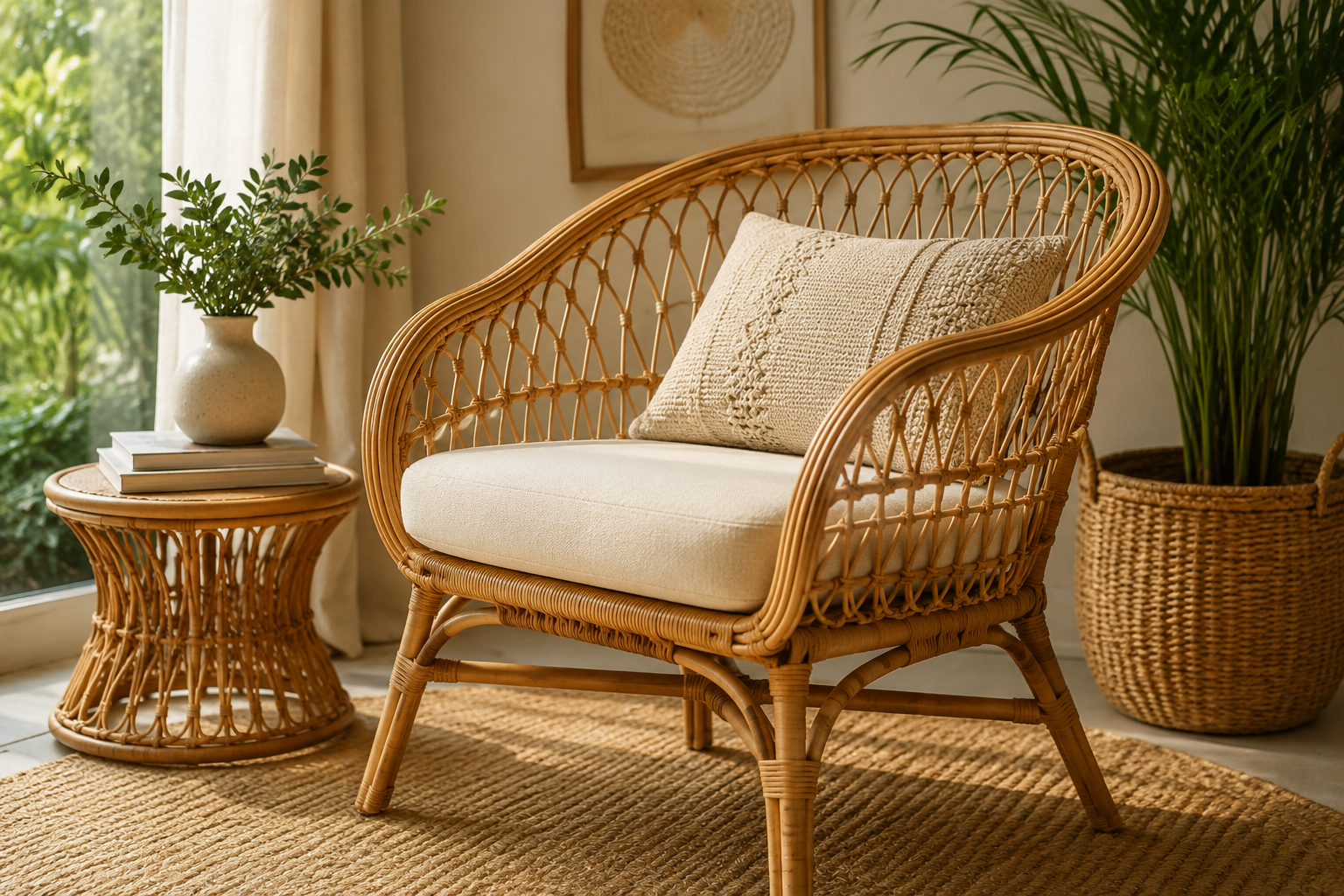
Rattan chairs have a way of making a room feel warmer and more relaxed. Their woven texture, lightweight frame, and natural appearance work beautifully in living rooms, bedrooms, dining spaces, balconies, and patios. Some designs feel rustic and traditional, while others look clean, modern, and surprisingly elegant.
However, buying the right rattan chair is not always as simple as choosing the most attractive design. Natural rattan and synthetic rattan behave differently, and not every chair is suitable for outdoor use. Comfort, frame quality, weaving, size, and maintenance also matter.
This guide explains what a rattan chair is, how it differs from wicker and cane furniture, the main types available, and what to check before bringing one into your home.
What Is a Rattan Chair?
A rattan chair is a chair made entirely or partly from rattan, a strong and flexible material taken from climbing palm plants. Rattan can be bent, shaped, and woven without breaking easily, which makes it well suited to furniture production.
Traditional rattan chairs are made from natural plant material. Thicker rattan stems may be used to form the frame, while thinner strips are woven around the seat, backrest, or arms. Modern outdoor designs often use synthetic rattan, which is usually made from resin or plastic fibers designed to copy the look of natural rattan.
Rattan chairs come in many forms, including:
- Dining chairs
- Lounge chairs
- Accent chairs
- Rocking chairs
- Hanging chairs
- Egg chairs
- Patio chairs
- Bar stools
Because rattan is visually light, it can add character to a room without making the space feel crowded or heavy.
What Does a Rattan Chair Look Like?
Most rattan chairs are easy to recognize by their woven details and curved frames. Natural versions usually have honey, beige, tan, or light brown tones, although they can also be stained, painted, or finished in darker shades.
Common design features include open-weave backrests, rounded arms, curved legs, braided edges, and woven seats. Many chairs also come with removable cushions to improve comfort.
A rattan chair does not have to look vintage or tropical. Modern designs may feature straight lines, black finishes, slim metal legs, neutral cushions, or minimal woven panels. This versatility allows rattan furniture to work with boho, coastal, farmhouse, Scandinavian, contemporary, and minimalist interiors.
What Is a Rattan Chair Made Of?
Natural rattan comes from the long stems of climbing palms found mainly in tropical regions. Unlike bamboo, which is hollow, rattan has a solid core. This gives it the strength needed to support weight while remaining flexible enough to shape into curved furniture frames.
The material may be steamed before it is bent into the desired form. Once the frame is built, thinner pieces can be wrapped or woven around it to create decorative and supportive sections.
Not every rattan-looking chair is made from a plant-based material. Many products sold for gardens and patios use synthetic fibers instead.
Natural Rattan
Natural rattan is valued for its warm color, individual grain, and handmade appearance. Small variations in tone and texture are normal and often make each chair feel unique.
It is generally best for indoor rooms, sunrooms, conservatories, or covered outdoor areas. Repeated exposure to rain, strong sunlight, or high humidity can cause natural fibers to fade, dry out, swell, or develop mold.
Natural rattan is a good choice when you want:
- Authentic texture
- Lightweight indoor furniture
- A warm, organic appearance
- Handwoven detailing
- A chair that complements wood and natural fabrics
With proper care, a well-made natural rattan chair can remain attractive and usable for many years.
Synthetic Rattan
Synthetic rattan is commonly made from polyethylene resin, PVC, or other weather-resistant materials. It is woven around a metal frame, often aluminum or steel, to create the appearance of traditional wicker furniture.
It is usually the better option for outdoor spaces because it can handle moisture and changing temperatures more effectively than natural fibers. Quality varies, though. Cheaper synthetic materials may become brittle, fade, or split after long exposure to sunlight.
Synthetic rattan is popular for patios and gardens because it is:
- Easy to wipe clean
- More resistant to rain
- Available in many colors
- Less likely to develop mold
- Suitable for low-maintenance outdoor furniture
For the best durability, look for UV-resistant synthetic fibers and a powder-coated aluminum frame.
Rattan vs Wicker: What Is the Difference?
Rattan and wicker are often treated as the same thing, but the words have different meanings.
Rattan is a material. Wicker is a method of weaving.
A wicker chair may be woven from natural rattan, synthetic resin, cane, willow, bamboo, or another flexible material. A rattan chair may use wicker weaving, but it can also include smooth, unwoven rattan poles in the frame.
A simple way to remember the difference is:
- Rattan refers to what the chair is made from.
- Wicker refers to how the material is woven.
This distinction is useful when shopping because a product described as a wicker chair is not necessarily made from natural rattan.
Rattan Chair vs Cane Chair
Rattan and cane come from the same plant, but they are used differently.
Rattan usually refers to the main stem of the plant. It is strong enough to create frames, legs, and curved supports. Cane is made from the outer skin of the rattan stem and is commonly used for thinner woven panels.
A cane chair often has a wooden or rattan frame with a delicate woven seat or backrest. The weave may have a recognizable webbed or octagonal pattern. Cane furniture tends to look lighter and more refined, while fully woven rattan furniture often has a thicker, more textured appearance.
Types of Rattan Chairs
The right style depends on where the chair will go and how often it will be used. A decorative bedroom chair has different requirements from a dining chair used every day.
Rattan Dining Chairs
Rattan dining chairs bring warmth to dining rooms and breakfast areas. Their lightweight design also makes them easy to pull out, move, and rearrange.
When choosing one, check the seat height against your dining table. A chair may look perfect online but feel uncomfortable if the seat is too high or too low. Cushioned seats are usually better for long meals, while tightly woven seats can work well for shorter, casual use.
Rattan dining chairs can be used as a matching set or combined with wooden chairs for a more relaxed, collected look.
Rattan Accent Chairs
An accent chair is one of the easiest ways to introduce rattan into a room. It can fill an empty corner, sit beside a sofa, or create a small reading area near a window.
Because the material has an open and airy look, a rattan accent chair can add texture without taking over the room. Pairing it with a soft cushion or throw can also make it feel more inviting.
Rattan Lounge Chairs
Rattan lounge chairs usually have wider seats, deeper frames, and more supportive cushions. They are designed for relaxing rather than upright dining.
These chairs work well in living rooms, bedrooms, sunrooms, and covered patios. Before buying, check the seat depth and backrest angle. An attractive low-profile chair may not be comfortable for someone who prefers firm back support or has difficulty getting up from deep seating.
Rattan Rocking Chairs
Rattan rocking chairs combine gentle movement with a lightweight frame. They are often placed in nurseries, bedrooms, porches, or quiet reading corners.
Look for smooth runners, stable construction, and comfortable arm placement. A seat cushion can make a noticeable difference, especially when the chair will be used for longer periods.
Rattan Egg and Hanging Chairs
Egg chairs and hanging rattan chairs have curved, cocoon-like shapes that create a cozy place to relax. Some hang from a ceiling mount, while others come with their own metal stand.
Before purchasing one, check:
- The maximum weight capacity
- The strength of the stand or ceiling support
- The floor space needed for movement
- Whether the chair is designed for indoor or outdoor use
- Whether cushions are included
These chairs need more clearance than they appear to, especially if they swing or rotate.
Outdoor Rattan Chairs
Most outdoor rattan chairs are made from synthetic fibers rather than natural rattan. They are available as dining chairs, armchairs, recliners, and modular lounge seats.
For uncovered patios, gardens, or poolside spaces, choose weather-resistant weaving over an aluminum frame. Steel frames can also be strong, but they need a protective finish to reduce the risk of rust.
What Are the Benefits of Rattan Chairs?
Rattan furniture is popular for more than its appearance. It offers several practical advantages when the right type is used in the right setting.
Lightweight and Easy to Move
Rattan chairs are often lighter than solid wooden or fully upholstered chairs. This makes them useful in rooms where furniture is moved regularly.
Dining chairs can be pulled out easily, accent chairs can be repositioned when guests arrive, and balcony seating can be stored without much effort.
Strong and Durable
A well-made rattan chair can be surprisingly strong. Its durability depends on the quality of the frame, the tightness of the weave, and the way the joints are secured.
Natural rattan can last for years indoors when protected from excess moisture and sunlight. Synthetic rattan is generally more durable outdoors, especially when made with UV-resistant fibers and a rust-resistant frame.
Comfortable With the Right Design
Rattan has a slight natural flexibility, which can make a woven seat feel less rigid than solid wood. Comfort still depends heavily on the shape of the chair.
A curved backrest, suitable seat depth, supportive arms, and quality cushions can turn a stylish chair into one that is genuinely pleasant to use. A flat, decorative chair with no cushioning may be better suited to occasional seating.
Adds Warmth and Texture
Woven rattan introduces texture into a room without relying on bold colors or heavy patterns. It pairs especially well with linen, cotton, wool, jute, wood, glass, and indoor plants.
In a modern room filled with smooth surfaces, a rattan chair can soften the overall look. In a traditional space, it can make the room feel more casual and welcoming.
Works With Different Interior Styles
Rattan is often associated with boho and coastal interiors, but it can suit many styles. A natural curved chair may feel relaxed and tropical, while a black rattan chair with slim legs can look modern and graphic.
Rattan furniture can work in:
- Boho interiors
- Coastal homes
- Scandinavian spaces
- Farmhouse rooms
- Tropical-inspired settings
- Modern minimalist interiors
- Vintage-style homes
The surrounding colors, cushions, and furniture determine how the chair is perceived.
Are Rattan Chairs Comfortable?
Rattan chairs can be comfortable, but not every design offers the same level of support.
Dining chairs are usually more upright, while lounge chairs have deeper seats and relaxed backrests. Some woven seats feel supportive on their own, while others need cushions for regular use.
When judging comfort, pay attention to:
- Seat width and depth
- Backrest shape
- Armrest height
- Cushion thickness
- Seat height
- The tightness of the weave
For everyday dining, a removable seat cushion can reduce pressure and make cleaning easier. For reading or relaxing, look for a chair with both seat and back cushions.
Are Rattan Chairs Strong and Durable?
Quality rattan chairs can support regular use, but construction matters more than appearance. A thick frame does not automatically mean the chair is strong, and a delicate-looking design may still be well engineered.
Check for tight weaving, stable legs, reinforced joints, and smooth edges. Sit in the chair if possible and listen for excessive creaking. Slight movement may be normal with natural materials, but the frame should not wobble.
Natural rattan should not be left in the rain or placed next to strong heat sources. Synthetic rattan is more suitable for outdoor use, but covering it during severe weather can still extend its lifespan.
Where Can You Use a Rattan Chair?
One reason rattan chairs remain popular is their flexibility. They can serve a practical purpose or simply add texture to an underused area.
Living Room
Place a rattan accent chair beside a sofa to break up heavy upholstery. A cushion that matches the room’s existing colors can help the chair feel connected to the rest of the furniture.
Bedroom
A small rattan chair can work beside a window, dressing table, or bedside table. It provides a place to read, put on shoes, or set down clothes without making the bedroom feel overcrowded.
Dining Room
Rattan dining chairs can make a formal dining area feel more relaxed. They look especially natural beside wooden, glass, or stone-topped tables.
Balcony or Patio
Choose synthetic rattan for an exposed balcony or patio. Natural rattan may work in a fully covered area, but it should still be protected from damp conditions and direct rain.
Home Office
A rattan chair can work as occasional office seating, but appearance should not replace proper support. For long working hours, check whether the chair encourages good posture and provides enough lower-back support.
Sunroom or Conservatory
Rattan suits bright spaces filled with natural light and plants. However, even indoors, intense direct sunlight can fade natural fibers over time. Curtains, blinds, or occasional repositioning may help protect the finish.
How to Choose the Right Rattan Chair
A good buying decision starts with how the chair will be used rather than how it looks in a styled photograph.
Decide Where the Chair Will Be Used
Natural rattan is generally best indoors. Synthetic rattan is the more practical choice for exposed outdoor spaces.
For humid, rainy, or coastal areas, pay close attention to the frame material. Powder-coated aluminum is often preferred because it is lightweight and resistant to rust.
Measure the Available Space
Check more than the chair’s width. A deep lounge chair may fit between two walls but still leave too little walking space in front of it.
Useful measurements include:
- Overall width
- Overall depth
- Backrest height
- Seat height
- Seat width
- Space around the arms
- Clearance from nearby furniture
For a hanging chair, include additional room for swinging or rotation.
Check the Frame and Weave
The weave should look even, secure, and balanced. Loose strands, large uneven gaps, broken fibers, or visible sharp fasteners may suggest poor construction.
The frame should sit level on the floor without wobbling. Joints should feel firm, and outdoor metal frames should have a weather-resistant coating.
Consider Comfort and Cushions
Think about how long you are likely to sit in the chair. A decorative accent chair may only need a thin cushion, while a lounge chair should offer deeper padding and back support.
Removable, washable cushion covers are helpful in busy homes. Outdoor cushions should be made from water-resistant or quick-drying fabric.
Check the Weight Capacity
Do not assume that all rattan chairs have the same strength. Look for a clear manufacturer-listed weight capacity, especially when buying hanging chairs, rocking chairs, or lightweight dining chairs.
Match the Chair With Your Room
Rattan works naturally with neutral tones, warm wood, woven rugs, plants, and soft fabrics. It can also create an attractive contrast with black metal, polished concrete, or modern glass furniture.
Before buying, consider whether the chair’s color, scale, and shape suit the furniture already in the room.
Natural Rattan vs Synthetic Rattan: Which Is Better?
The better option depends on where the chair will be used and how much maintenance you are willing to do.
Choose natural rattan when the chair will remain indoors and you want an authentic, handcrafted appearance. Its color variation and organic texture are difficult for synthetic materials to copy perfectly.
Choose synthetic rattan when the chair will be kept outside or regularly exposed to moisture. It is easier to clean and generally needs less maintenance.
Natural rattan usually offers more character, while synthetic rattan offers greater weather resistance and convenience.
How Much Does a Rattan Chair Cost?
The price of a rattan chair can vary widely. Material quality, frame construction, weaving method, brand, size, and cushion fabric all affect the cost.
Handmade natural rattan chairs may be more expensive because shaping and weaving the material requires skilled work. Synthetic rattan chairs range from affordable stackable patio seating to premium outdoor lounge furniture.
Rather than choosing only by price, compare:
- Frame material
- Weaving quality
- Cushion construction
- Weight capacity
- Indoor or outdoor rating
- Warranty
- Customer reviews
A low-priced chair may be suitable for occasional use, but everyday seating is usually worth a closer look at durability and comfort.
How to Clean and Maintain a Rattan Chair
Dust can collect inside woven sections, so light, regular cleaning is better than waiting until the chair looks dirty.
Use a soft brush, microfiber cloth, or vacuum attachment to remove loose dust. A small brush can help clean narrow gaps in the weave. Wipe the surface with a slightly damp cloth and dry it afterward.
Avoid soaking natural rattan or using strong chemical cleaners. Too much water can affect the fibers and joints.
For synthetic rattan, mild soap and water are usually enough. Outdoor chairs can be rinsed gently, but they should be allowed to dry properly before cushions are replaced.
To help a rattan chair last longer:
- Keep natural rattan away from rain
- Avoid placing it directly beside radiators
- Protect it from prolonged strong sunlight
- Clean spills promptly
- Store or cover outdoor furniture during severe weather
- Wash cushion covers according to their care labels
Common Mistakes to Avoid When Buying a Rattan Chair
One of the biggest mistakes is buying natural rattan for an uncovered outdoor area. It may look perfect on a patio at first, but constant exposure to moisture can shorten its lifespan.
Other common mistakes include:
- Choosing appearance without checking comfort
- Forgetting to measure the room
- Ignoring the recommended weight capacity
- Buying dining chairs with the wrong seat height
- Assuming every wicker chair is made from rattan
- Overlooking loose or uneven weaving
- Choosing outdoor furniture with a rust-prone frame
- Buying fixed cushions that are difficult to clean
- Leaving natural rattan in direct rain or harsh sunlight
Taking a few minutes to check the material, measurements, frame, and intended use can help you choose a rattan chair that looks good and remains practical long after the initial purchase.