

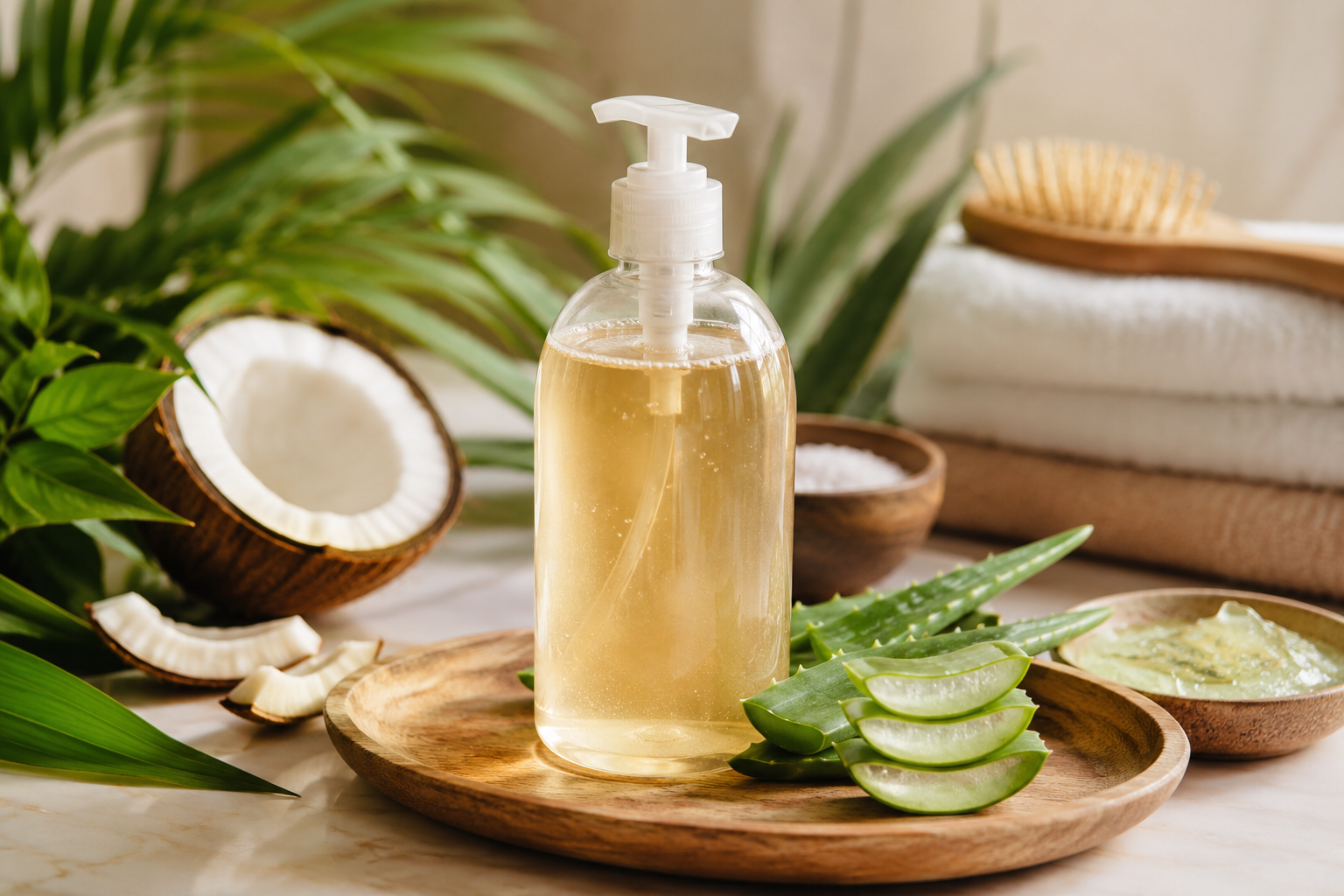
Many shampoos do a great job of removing oil, sweat, and styling products, but they can sometimes leave the hair feeling rough, dry, or difficult to manage. Strong cleansers, heavy fragrances, and long ingredient lists may not work well for everyone, especially people with dry hair, curls, or a sensitive scalp.
That is one reason homemade natural shampoo has become a popular part of a simpler natural hair care routine. When you make shampoo at home, you can choose gentle shampoo ingredients based on what your hair actually needs. You can add more moisture for dry ends, keep the formula lightweight for oily roots, or leave out fragrance when your scalp is easily irritated.
Making shampoo at home does involve some trial and error. A recipe that leaves one person’s hair soft and fresh may feel too heavy or too cleansing for someone else. The goal is not to create a perfect formula on the first try. It is to start with a simple recipe, pay attention to how your hair responds, and make small adjustments along the way.
How to Make Natural Shampoo Without Harsh Chemicals
To make natural shampoo without harsh chemicals, you need three basic parts: a mild cleansing ingredient, a liquid base, and one or two moisturizing or soothing additions. Optional herbs and essential oils can be included, but they are not necessary for an effective shampoo.
A simple homemade formula might contain unscented liquid Castile soap, distilled water, aloe vera gel, and a small amount of jojoba oil. These ingredients create a light cleanser that can be customized for several hair types.
The basic process is straightforward:
- Choose a gentle natural cleanser.
- Add distilled water or a cooled herbal infusion.
- Include a moisturizing ingredient such as aloe vera.
- Add a small amount of carrier oil when needed.
- Pour the mixture into a clean bottle.
- Shake gently before each use.
- Test the shampoo on a small area before using it regularly.
Natural shampoo usually creates less foam than conventional shampoo. That does not mean it is failing to clean your hair. Thick lather often comes from added foaming agents, while many mild natural cleansers produce only a light lather.
A Simple Homemade Natural Shampoo Recipe
This beginner-friendly recipe is easy to prepare and does not require any special equipment.
You will need:
- ½ cup distilled water
- ½ cup unscented liquid Castile soap
- 1 tablespoon pure aloe vera gel
- 1 teaspoon jojoba oil or sweet almond oil
- 5 drops of lavender, rosemary, or peppermint essential oil, if desired
- A clean squeeze or pump bottle
Pour the distilled water into the bottle first. Add the aloe vera gel and carrier oil, then gently swirl the container. Slowly add the liquid Castile soap to avoid creating too much foam. Add the essential oil last, close the bottle, and turn it upside down a few times to combine everything.
Do not shake the bottle aggressively, as this can fill it with bubbles. Before each wash, gently tip or roll the bottle between your hands.
This recipe is best used in small amounts. Because it contains water and does not include a professional preservative, it should not be stored for long periods. Make a small batch, keep the bottle clean, and watch for any change in smell, texture, or appearance.
Castile soap may also feel too cleansing for very dry, color-treated, or highly porous hair. In that case, reduce the amount of soap or try a soap-free herbal cleanser instead.
Why Choose Shampoo Without Harsh Ingredients?
Not every synthetic ingredient is automatically bad, and not every natural ingredient is suitable for everyone. What matters most is how a product behaves on your scalp and hair.
Some people prefer chemical-free hair care because conventional shampoo leaves their scalp feeling tight or their hair feeling stripped. Others want to avoid strong artificial fragrances or simplify the products they use every day.
A gentler shampoo may be worth trying when you regularly experience:
- Dry or brittle hair after washing
- An itchy or tight-feeling scalp
- Frizz that becomes worse after shampooing
- Sensitivity to strong scents
- Tangled or rough ends
- Buildup from heavy hair products
Some conventional shampoos use strong sulfates to remove oil and create a rich lather. These cleansers can work well for oily scalps or heavy buildup, but they may be too powerful for dry, curly, or damaged hair when used frequently.
Artificial fragrance is another common concern. A pleasant scent does not necessarily make a shampoo better for your hair, and people with sensitive skin may prefer fragrance-free options.
Heavy silicones can also build up when they are not washed away properly. They may create temporary smoothness, but some hair types can become flat or coated over time.
The best approach is to read labels, observe your hair, and avoid assuming that one ingredient is either perfect or harmful for everyone.
Choosing the Right Natural Shampoo Ingredients
The quality of a DIY shampoo depends largely on the ingredients you choose. A good recipe should cleanse the scalp without making the hair feel stiff, greasy, or coated.
Gentle Natural Cleansers
Liquid Castile soap is one of the most common ingredients in DIY natural shampoo recipes. It is convenient and easy to mix, but it has a higher pH than hair naturally prefers. Some people enjoy the clean feeling it provides, while others find that it leaves their hair rough.
Soap nuts are another plant-based option. They contain naturally occurring cleansing compounds and can be simmered in water to create a mild liquid wash.
Shikakai is a traditional herbal hair cleanser often sold as a powder. It can be mixed with water or herbal tea to create a thin paste. It tends to produce very little foam, but many people use it as a gentle alternative to soap-based shampoo.
Rhassoul clay can absorb oil and remove buildup. It is usually better as an occasional cleanser than an everyday shampoo, especially for hair that is already dry.
Coconut milk is often included in homemade shampoo for extra moisture. It does not clean the hair well on its own, so it should be combined with a mild cleanser.
Baking soda appears in many older homemade shampoo recipes, but frequent use can leave the hair feeling dry, swollen, or rough. It is generally better to choose a gentler option.
Moisturizing and Soothing Additions
Aloe vera gel is one of the easiest ingredients to add to a natural shampoo. It has a lightweight texture and can help make a cleansing formula feel less drying.
Jojoba oil is useful for dry ends because it is lighter than many other oils. Argan oil works well in small quantities for coarse or frizzy hair, while sweet almond oil can add softness to a simple recipe.
Vegetable glycerin attracts moisture, but too much can leave hair sticky or heavy. Begin with a small amount and adjust only when needed.
Honey may also be added for softness, but it should be mixed thoroughly and used in a fresh batch. Recipes containing fresh or food-based ingredients can spoil quickly.
Herbs for Homemade Shampoo
Herbal infusions can replace plain water in a homemade shampoo recipe. To prepare one, steep the herbs in hot water, allow the liquid to cool completely, and strain it carefully before adding it to the formula.
Popular choices include:
- Rosemary for a fresh, herbal scalp rinse
- Chamomile for a mild and soothing wash
- Lavender for a light natural scent
- Peppermint for a cooling feeling
- Hibiscus for moisture-focused hair care
- Fenugreek for dry or fragile hair
- Nettle for herbal scalp blends
Herbs can make a recipe feel more customized, but they also shorten its shelf life. A shampoo made with herbal tea should be prepared in a small batch and stored carefully.
Natural Shampoo Recipes for Different Hair Types
Hair type matters when choosing ingredients. Dry curls need more moisture than oily, fine hair, while a sensitive scalp usually benefits from fewer ingredients rather than a complicated blend.
Natural Shampoo for Dry and Frizzy Hair
Dry hair often needs a mild cleanser with enough moisture to prevent the ends from feeling brittle.
Try combining:
- ½ cup coconut milk
- ¼ cup unscented liquid Castile soap
- 1 tablespoon aloe vera gel
- 1 teaspoon jojoba or argan oil
- 3 to 5 drops of lavender essential oil
Apply the shampoo mainly to the scalp. The water and cleanser that run through the lengths during rinsing are usually enough to remove light dirt without drying the ends.
People with dry hair may not need to shampoo every day. Washing less often and following with a suitable conditioner can help the hair feel softer.
Homemade Natural Shampoo for Oily Hair
Oily hair needs cleansing without heavy oils or rich ingredients. A lightweight mixture can help remove excess oil while keeping the recipe simple.
Use:
- ½ cup cooled rosemary tea
- ½ cup mild liquid cleanser
- 1 tablespoon aloe vera gel
- 3 drops of rosemary or peppermint essential oil
Avoid adding large amounts of carrier oil. Even beneficial oils can weigh down fine hair and make freshly washed roots look greasy.
It may be tempting to use a very strong cleanser on an oily scalp, but aggressive washing can sometimes leave the scalp feeling uncomfortable. Start with a gentle formula and adjust the amount based on your results.
Natural Shampoo for Curly Hair
Curly and coily hair is often drier through the lengths because natural scalp oils do not travel easily around each bend.
A moisture-focused recipe may include:
- ½ cup distilled water
- ¼ cup mild cleanser
- 2 tablespoons aloe vera gel
- 1 tablespoon coconut milk
- ½ teaspoon jojoba oil
- ½ teaspoon vegetable glycerin
Massage the shampoo into the scalp rather than scrubbing the entire length. Rinse thoroughly and follow with conditioner or a moisturizing hair treatment.
Gentle Shampoo for a Sensitive Scalp
A sensitive scalp usually responds best to a short ingredient list.
A simple fragrance-free formula can contain:
- ½ cup distilled water or cooled chamomile tea
- ½ cup unscented mild cleanser
- 1 tablespoon pure aloe vera gel
Leave out essential oils, fragrance, and strong herbal extracts at first. Even natural ingredients can cause irritation, so always test the formula on a small area before applying it across the scalp.
Stop using the shampoo if you notice burning, redness, swelling, or ongoing itching.
Natural Shampoo for Dandruff or Flaking
A flaky scalp can have many causes, including dryness, irritation, product buildup, or a scalp condition. A gentle shampoo may help remove buildup, but it may not solve the underlying problem.
A basic scalp-focused blend may contain:
- ½ cup rosemary tea
- ½ cup mild natural cleanser
- 1 tablespoon aloe vera gel
- 2 or 3 drops of properly diluted tea tree essential oil
Use essential oils carefully. More is not better, and undiluted tea tree oil should never be applied directly to the scalp.
Persistent, painful, or severe flaking may require advice from a healthcare professional rather than repeated DIY treatments.
How to Customize Your DIY Natural Shampoo
The easiest way to improve homemade shampoo is to change one ingredient at a time. Making several changes at once makes it difficult to understand what helped and what caused a problem.
Use these adjustments as a starting point:
- Add more aloe vera when the shampoo feels too drying.
- Reduce carrier oil if the roots feel greasy.
- Replace plain water with a cooled herbal infusion.
- Leave out essential oils for a fragrance-free formula.
- Add coconut milk for dry or coarse hair.
- Reduce the cleanser if the hair feels stripped.
- Make smaller batches when using fresh ingredients.
- Add a little vegetable glycerin when the hair needs more moisture.
Keep brief notes after each wash. Write down how the scalp felt, whether the hair was easy to detangle, and whether there was any residue. This makes it much easier to build a recipe that fits your hair.
How to Wash Your Hair With Homemade Shampoo
Using natural shampoo is slightly different from using a thick commercial formula. Homemade blends are often thinner and may not spread as easily.
Wet your hair and scalp thoroughly before applying the shampoo. A fully wet scalp helps the cleanser move more evenly and reduces the amount you need.
Apply a small amount directly to the roots. Massage gently with your fingertips for about one minute, focusing on oily or sweaty areas. Avoid scratching the scalp with your nails.
Let the shampoo rinse through the lengths instead of rubbing the ends together. Rinse carefully with lukewarm water. Repeat only when the scalp still feels oily or coated.
Using too much homemade shampoo can leave residue, especially when the formula contains oils, coconut milk, or aloe vera. Begin with a small amount and add more only when necessary.
Using an Apple Cider Vinegar Rinse
Some people follow Castile soap shampoo with a diluted apple cider vinegar rinse because soap-based cleansers can leave the hair feeling rough or tangled.
A simple rinse can be made with:
- 1 tablespoon apple cider vinegar
- 1 cup water
Pour or spray the diluted mixture over the hair after shampooing. Keep it away from the eyes and avoid using it on broken or irritated skin. Rinse it out after a short time.
Never apply undiluted vinegar directly to the scalp. Strong mixtures may cause stinging, dryness, or irritation.
What Happens When You Switch to Natural Shampoo?
Your hair may feel different during the first few washes, but this does not necessarily mean it is “detoxing.” Changes in texture usually happen because you are using a different type of cleanser and fewer coating ingredients.
You may notice that:
- The shampoo creates less foam.
- The hair has less slip while wet.
- The roots feel heavier if the recipe contains too much oil.
- The ends feel dry if the cleanser is too strong.
- Curly hair needs more conditioning.
- Styling-product buildup takes more than one wash to remove.
Give yourself time to adjust the recipe, but do not continue using a formula that causes irritation or makes your hair increasingly dry.
Common Homemade Shampoo Mistakes
DIY hair care can be simple, but a few common mistakes can affect both the quality and safety of the shampoo.
Using too much essential oil is one of the biggest problems. Essential oils are highly concentrated and should be added only in small, properly diluted amounts.
Making a large batch is another mistake. Water-based recipes can support microbial growth, especially when they contain coconut milk, herbal tea, honey, or fresh aloe.
Tap water may also shorten the life of the product. Distilled water is a better choice for homemade formulas.
Other mistakes include:
- Using baking soda too often
- Adding too much carrier oil
- Assuming a strong lather means better cleaning
- Storing the bottle in a warm, humid place
- Touching the inside of the bottle with wet fingers
- Ignoring changes in smell or texture
- Skipping a patch test
- Mixing ingredients without checking whether they work well together
A simple recipe is often more effective than a bottle filled with ten different ingredients.
How to Store Homemade Natural Shampoo
Homemade shampoo does not usually contain the broad-spectrum preservatives found in professionally formulated products. This means storage needs to be taken seriously.
Use a clean, sterilized bottle and label it with the date the shampoo was made. Keep the lid closed and avoid allowing shower water to enter the container.
Prepare only enough for a short period. Recipes made with herbal tea, coconut milk, honey, or fresh aloe should be treated as highly perishable.
Watch for warning signs such as:
- A sour or unusual smell
- Separation that does not mix again
- A major change in texture
- Cloudiness
- Visible growth
- A change in color
Throw the shampoo away when anything seems unusual. Essential oils, vitamin E, and grapefruit seed extract should not be relied on as complete preservatives.
How Often Should You Use Natural Shampoo?
There is no single washing schedule that works for everyone. The right frequency depends on scalp oil, hair texture, weather, exercise, and the number of styling products you use.
Fine or oily hair may need washing several times a week. Dry, curly, or coily hair may feel better with less frequent shampooing. People who exercise heavily may need to rinse or cleanse the scalp more often.
Pay attention to how your roots and ends behave. Wash when the scalp feels oily, sweaty, itchy, or coated rather than following a strict rule.
Occasional clarifying may also be needed when you use heavy creams, oils, gels, or silicone-based styling products.
When Homemade Shampoo Is Not the Best Option
A DIY formula is not always the safest or most convenient choice. People with an active scalp condition, unexplained hair loss, severe irritation, or recurring dandruff may need a professionally formulated or medicated product.
Homemade shampoo may also be unsuitable when you need:
- A product that can be stored for several months
- A precisely balanced pH
- A formula for recently bleached or chemically treated hair
- A medicated treatment for a scalp condition
- A highly consistent result with every wash
- A professionally preserved product
Choosing a ready-made gentle shampoo is not a failure. A well-formulated natural shampoo can still support a simpler chemical-free hair care routine without the storage concerns that come with homemade products.