

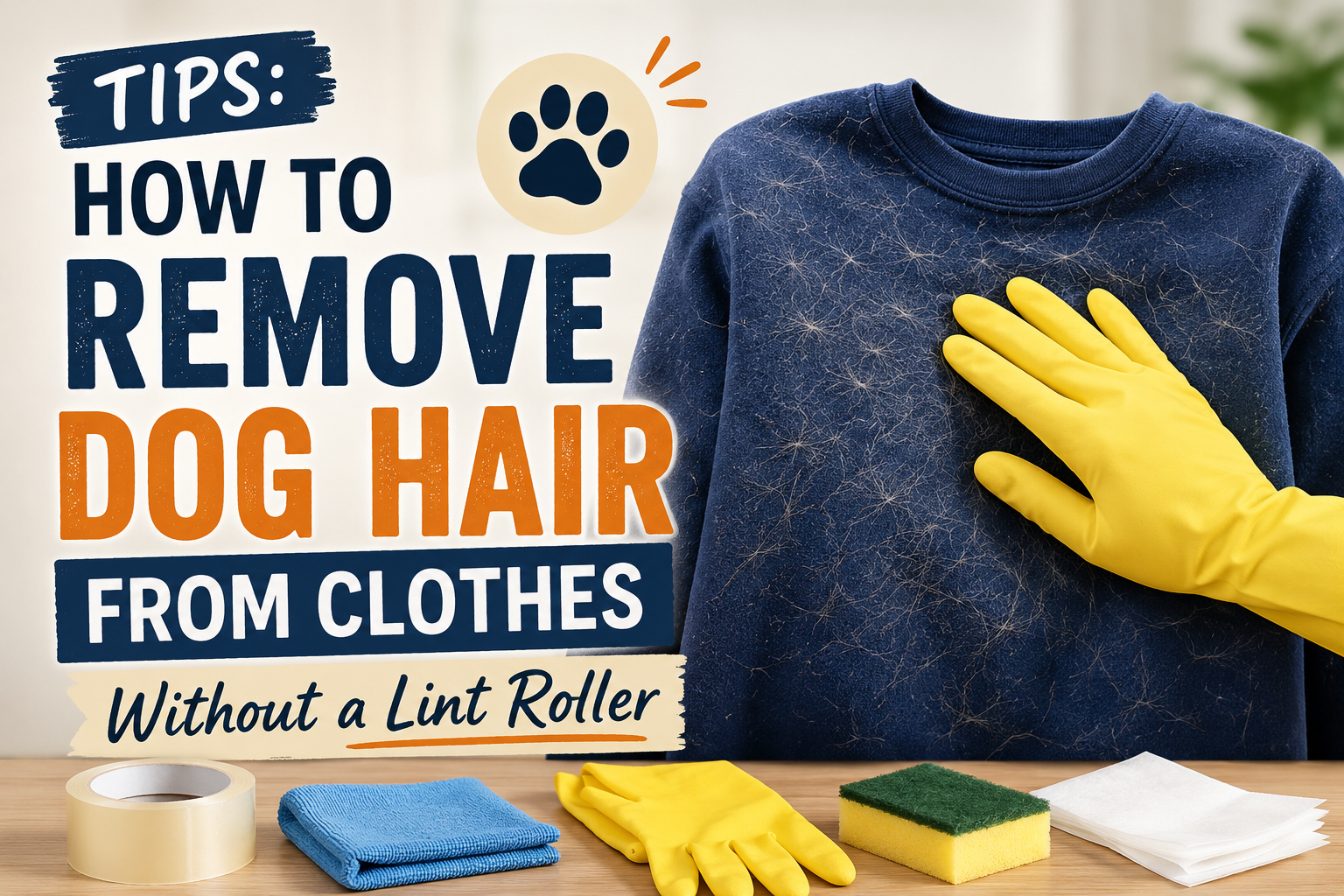
Open with a relatable situation: you are ready to leave the house, only to notice that your shirt, trousers, or jacket is covered in dog hair. Mention that a lint roller is useful, but it is not always available and can become expensive if used regularly.
Briefly explain that several everyday household items can remove pet hair quickly without damaging clothing. Introduce the methods covered in the article, including rubber gloves, damp hands, dryer sheets, tape, sponges, and simple laundry tricks.
How to Remove Dog Hair From Clothes Without a Lint Roller
Explain that the best method depends on the fabric, the amount of hair, and whether the clothes are dry, damp, or freshly washed. For light dog hair, a quick wipe may be enough. For stubborn pet hair stuck in fleece, wool, or synthetic fabrics, readers may need to loosen the hair before washing or drying.
Mention that it is usually easier to remove dog hair before putting clothes in the washing machine. Wet pet hair can cling more tightly to fabric and may collect inside the washer.
Use Damp Rubber Gloves
Explain how rubber gloves create friction that gathers loose dog hair into small clumps.
- Put on a clean pair of rubber cleaning gloves.
- Lightly dampen the gloves with water.
- Run your hands over the clothing in one direction.
- Pick up the collected hair and repeat where needed.
Add that this method works especially well on coats, trousers, upholstery, and thicker fabrics. Advise readers not to soak the gloves, as too much water can make the clothing unnecessarily damp.
Wipe the Fabric With Damp Hands
Present this as one of the fastest ways to remove dog hair from clothes before leaving the house.
Tell readers to slightly wet their hands, shake off the extra water, and gently wipe the fabric from top to bottom. The moisture helps loose pet hair stick to the hands rather than the clothing.
Mention that this method is best for small amounts of hair and smooth fabrics. It may not be strong enough for stubborn dog hair trapped in fleece or wool.
Try a Clean, Slightly Damp Sponge
Explain that a soft kitchen sponge can work as a simple pet hair remover.
Recommend using a clean sponge with no soap, grease, or cleaning chemicals on it. Lightly dampen the sponge and move it across the clothing in one direction.
Include a warning to avoid rough scrubbing, especially on delicate materials, because it may stretch the fabric or cause pilling.
Use Sticky Tape for Quick Touch-Ups
Explain how packing tape, masking tape, or wide office tape can replace a lint roller in an emergency.
- Wrap the tape around your hand with the sticky side facing outward.
- Press it gently against the hairy areas.
- Replace the tape once it loses its stickiness.
Mention that tape is useful for removing dog hair from black clothes, workwear, and small areas. Advise testing strong tape on an inside seam first, as it may leave residue or pull at delicate fabric.
Remove Dog Hair With a Dryer Sheet
Explain that dryer sheets can reduce static, which is one reason dog hair sticks to clothing.
Suggest gently rubbing a clean dryer sheet over the fabric to loosen and collect pet hair. This works well for quick touch-ups and can also leave clothes smelling fresher.
Note that people with sensitive skin should use fragrance-free dryer sheets or choose another method.
How to Get Dog Hair Off Clothes in the Washing Machine
Explain that the washing machine may not remove all dog hair on its own. In some cases, water causes the hair to settle back onto clothes.
Recommend shaking clothing outdoors and removing as much loose hair as possible before washing. Readers can also run heavily covered clothes through a short dryer cycle on low or no heat before putting them in the washer. The dryer’s movement helps loosen pet hair, while the lint filter catches some of it.
Add White Vinegar to the Rinse Cycle
Explain that adding around half a cup of white vinegar to the rinse cycle may help relax fabric fibres and release trapped pet hair.
Mention that vinegar should go into the fabric-softener compartment rather than being poured directly onto clothing. Advise readers to check garment care labels and washing machine instructions first.
Avoid Overloading the Washer
Explain that clothes need room to move around for dog hair to separate from the fabric. An overloaded washing machine can trap hair between garments and leave laundry looking just as furry as before.
Recommend washing pet-hair-covered clothes in smaller loads and cleaning the washing machine drum afterward.
Clean the Dryer Lint Filter
Remind readers to clean the lint filter before and after drying clothes covered in dog hair. A clogged filter reduces airflow and makes it harder for the dryer to collect loose hair.
Mention that wiping the dryer drum after a heavy pet-hair load can prevent hair from transferring to the next batch of laundry.
How to Remove Stubborn Dog Hair From Fleece and Wool
Explain that fleece, wool, and some synthetic fabrics attract pet hair because of their texture and static charge.
Recommend starting with damp rubber gloves or a soft sponge. Work slowly in one direction rather than rubbing back and forth. For wool clothing, use gentle pressure to avoid damaging the fibres.
Suggest checking the care label before using a dryer, washing machine, vinegar, or any moisture-based method.
Easy Ways to Stop Dog Hair From Sticking to Clothes
Introduce prevention as the easiest way to reduce time spent removing pet hair.
- Brush the dog regularly, especially during shedding season.
- Keep clean clothes in a closed wardrobe or storage container.
- Avoid placing freshly washed clothing on pet-covered furniture.
- Wash dog bedding frequently.
- Vacuum sofas, chairs, rugs, and car seats regularly.
- Choose tightly woven fabrics that attract less pet hair.
- Keep a rubber glove, sponge, or roll of tape near the front door for quick cleanups.
End the final paragraph by reinforcing that readers do not need a lint roller to keep their clothes looking clean. With a few household items and a better laundry routine, dog hair can be removed quickly and kept under control.