

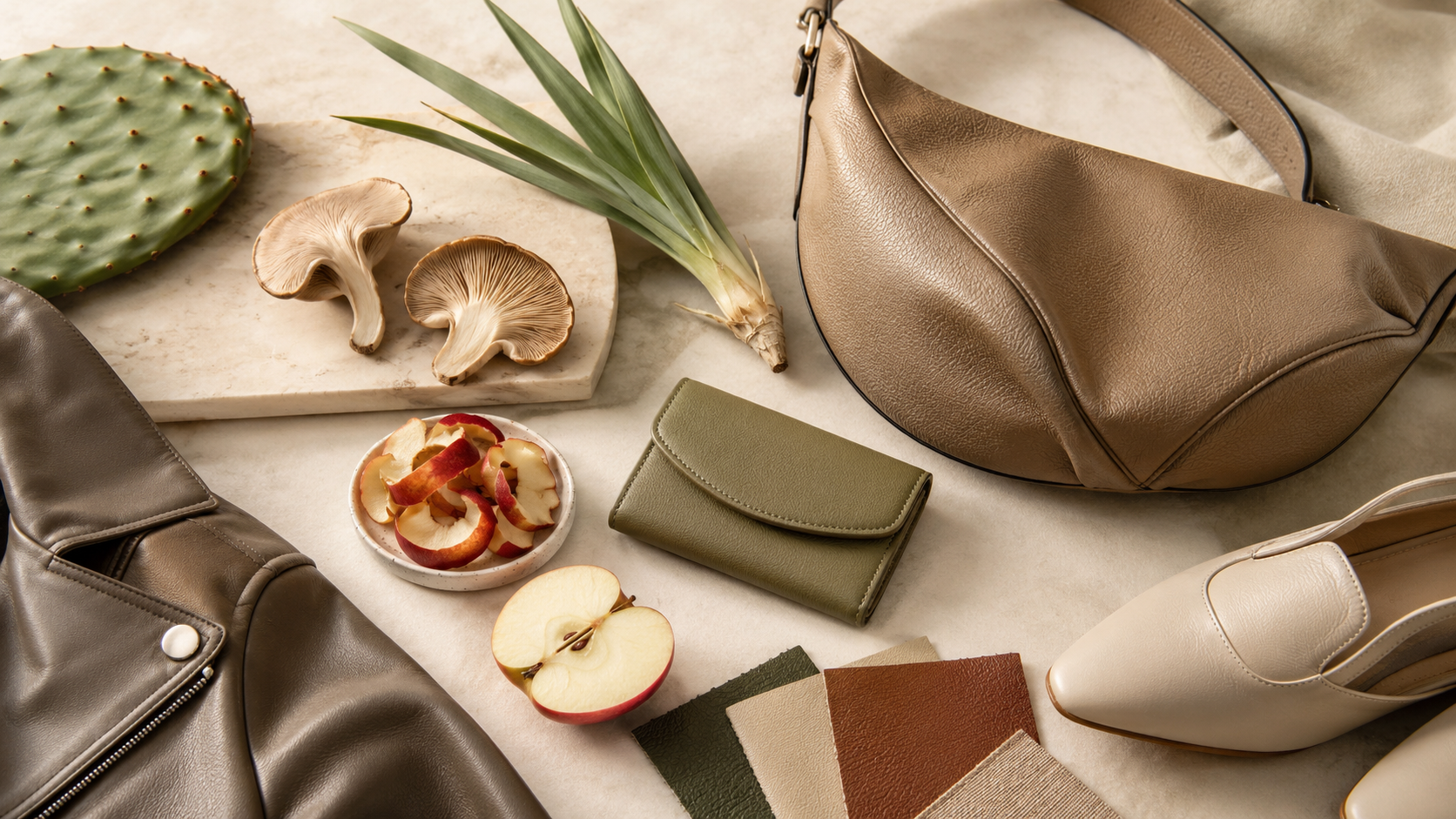
Vegan leather has moved far beyond being a niche material. You can now find it on handbags, jackets, shoes, sofas, car seats, wallets, and even phone cases. It is often presented as an animal-free alternative to traditional leather, but that description only tells part of the story.
The term covers a wide range of materials. Some are made mainly from polyurethane or PVC, while newer versions use ingredients such as cactus, pineapple leaves, apple waste, mushrooms, cork, and grapes. Because these materials are produced in different ways, they do not all feel, perform, or age the same.
Understanding what vegan leather is made from can help you decide whether it suits your budget, lifestyle, and expectations.
What Is Vegan Leather?
Vegan leather is a leather-like material made without using animal hides. It is designed to copy the appearance, grain, softness, and flexibility of real leather while providing an animal-free option.
It may also be described as:
- Faux leather
- Synthetic leather
- Artificial leather
- PU leather
- Leather alternative
- Plant-based leather
These terms are sometimes used as though they mean exactly the same thing, but there can be important differences between them. Traditional faux leather is usually made from plastic-based materials, while plant-based vegan leather may contain agricultural waste, natural fibers, or bio-based ingredients.
The word “vegan” simply means the material does not come from animal skin. It does not automatically mean the product is biodegradable, plastic-free, sustainable, or made entirely from plants.
Is Vegan Leather Real Leather?
Vegan leather is not real leather because it is not made from animal hide. Genuine leather is created by treating and preserving animal skin, while vegan alternatives are manufactured from synthetic or plant-derived materials.
A good-quality vegan leather product can closely resemble real leather. It may have a realistic grain, smooth finish, and flexible feel. Lower-quality versions can feel thin, stiff, or noticeably plastic-like.
Real leather also changes as it ages. It may soften and develop a patina, which gives the surface more character over time. Most synthetic vegan leather does not age in the same way. Instead, it may remain consistent for a while before eventually cracking, peeling, or losing its surface coating.
What Is Vegan Leather Made From?
There is no single recipe for vegan leather. The material used depends on the manufacturer, product category, price point, and intended performance.
Most options fall into two broad groups: synthetic vegan leather and plant-based leather alternatives.
PU Leather
Polyurethane leather, commonly known as PU leather, is one of the most widely used types. It is often found in handbags, clothing, footwear, furniture, and vehicle interiors.
PU leather is usually made by applying a polyurethane coating to a fabric base. The surface is then treated or embossed to create a leather-like texture.
Compared with PVC leather, PU is often softer, lighter, and more flexible. It may also feel more comfortable in clothing and shoes. However, its quality can vary. A well-made PU bag may last for years, while a thin, cheaply coated item may begin peeling much sooner.
PVC Leather
PVC leather is made with polyvinyl chloride. It is known for being affordable, water-resistant, and easy to clean.
The material is often used in upholstery, low-cost accessories, protective coverings, and products that need a smooth, durable surface. It can be stiffer and less breathable than PU, which may make it less comfortable for jackets, footwear, or seating used for long periods.
PVC also raises environmental concerns because it is plastic-based and can be difficult to recycle. The additives and manufacturing methods used may also affect its overall environmental impact.
Plant-Based Vegan Leather
Plant-based vegan leather is becoming more common as brands explore alternatives to fully synthetic materials. These products may use fibers, pulp, oils, or waste taken from plants and agriculture.
Examples include:
- Mushroom leather
- Cactus leather
- Apple leather
- Pineapple leather
- Grape leather
- Cork leather
- Corn-based leather alternatives
Apple leather may use waste from juice or food production. Pineapple leather can use fibers from leaves that might otherwise be discarded. Cactus leather is produced using parts of cactus plants, while mushroom leather is developed from fungal structures known as mycelium.
However, plant-based does not always mean completely natural. Some materials still require polyurethane coatings, synthetic binders, fabric backing, or plastic finishes to improve durability and water resistance. Checking the actual material composition is more useful than relying on the product name alone.
How Is Vegan Leather Made?
The manufacturing process depends on the type of material.
For synthetic vegan leather, a woven or nonwoven fabric is used as the base. A layer of polyurethane or PVC is applied on top, creating a smooth and flexible surface. The material may then be pressed with a grain pattern so that it resembles cowhide, suede, or another leather finish.
Color, shine, thickness, and texture can all be adjusted during production. This is one reason vegan leather is available in such a wide range of styles.
Plant-based materials follow a different process. Plant fibers, pulp, oils, or agricultural by-products are processed into sheets or flexible layers. These may be mixed with other materials, placed on a fabric backing, and finished with a protective coating.
Some newer methods aim to reduce plastic content, but the percentage of plant material varies between products. A bag marketed as cactus leather, for example, may contain cactus-based ingredients along with synthetic components.
Benefits of Vegan Leather
People choose vegan leather for ethical, practical, and financial reasons. Its main advantages depend on the type of product and the quality of the material.
It Provides an Animal-Free Option
The most obvious benefit is that vegan leather does not use animal hides. This makes it appealing to people who avoid leather for ethical, religious, or personal reasons.
That said, shoppers who want a completely animal-free product should still check the details. Glues, dyes, finishes, or decorative parts may sometimes contain animal-derived ingredients, even when the outer material is synthetic.
It Is Often More Affordable
Vegan leather is usually less expensive than genuine leather. PU and PVC can be produced quickly and consistently, which helps keep costs down.
This makes leather-look jackets, shoes, sofas, and bags available to shoppers who may not want to pay for real leather. Prices still vary, especially for high-end plant-based alternatives, but there are options across a wide range of budgets.
It Comes in Many Colors and Finishes
Manufacturers have a great deal of control over the finished appearance. Vegan leather can be matte, glossy, textured, smooth, metallic, embossed, or printed.
It is also easy to produce in colors that may be harder or more expensive to achieve with animal leather. This makes it especially popular in fashion, where seasonal colors and unusual finishes are common.
It Can Be Easy to Maintain
Many types of vegan leather can be wiped clean with a soft, damp cloth. Light spills usually remain on the surface instead of soaking in immediately.
This can make the material practical for:
- Dining chairs
- Sofas
- Car seats
- Handbags
- Children’s furniture
- Everyday shoes
Its low-maintenance surface is one reason it is widely used in busy homes and commercial spaces.
Drawbacks of Vegan Leather
Vegan leather is not automatically the best option in every situation. Some disadvantages become more noticeable after long-term use.
Some Versions Are Plastic-Based
Most common vegan leather is made from PU or PVC. These materials are derived from plastics and may rely on fossil fuels.
They do not usually biodegrade easily, and recycling them can be difficult because the plastic coating is often bonded to a fabric backing. A product may be animal-free while still creating environmental concerns during manufacturing and disposal.
It Can Peel or Crack
Peeling is one of the most familiar problems with low-quality faux leather. The top coating may begin to separate from the fabric underneath, particularly in areas that bend or rub frequently.
Heat, sunlight, moisture, body oils, and poor storage can speed up this damage. Handbag handles, jacket elbows, sofa cushions, and shoe creases are common trouble spots.
Once the surface starts flaking, it can be difficult to repair without making the patch noticeable.
It May Have a Shorter Lifespan
High-quality vegan leather can last for several years, but many synthetic products do not last as long as well-maintained genuine leather.
Real leather can often be conditioned, repaired, recolored, or polished. Synthetic coatings are harder to restore once they split or peel.
A cheap vegan leather bag that needs replacing every year may create more waste than a better-made product used for a long time. Durability matters when comparing environmental impact.
It May Feel Less Breathable
Heavily coated vegan leather can trap heat and moisture. This may be uncomfortable in shoes, jackets, sofas, and car seats.
Breathability depends on the backing material, thickness, coating, and construction. Softer PU may feel more comfortable than PVC, but it still may not breathe like natural leather or fabric.
Is Vegan Leather Sustainable?
The sustainability of vegan leather depends on what it is made from, how it is produced, how long it lasts, and what happens when it is discarded.
Plastic-based vegan leather avoids animal hides, but it may involve petroleum-based materials and limited recycling options. Plant-based alternatives can reduce the amount of fossil-fuel-based content, although many still use synthetic coatings or binders.
Rather than assuming one option is automatically sustainable, look for clear information about:
- The percentage of plant-based material
- Whether PVC is used
- Recycled content
- Product lifespan
- Repairability
- Manufacturing methods
- Waste reduction
- End-of-life options
A durable item that is used regularly for many years may be a better purchase than a trendy product that quickly peels and ends up in the bin.
Common Uses of Vegan Leather
Vegan leather is versatile, which explains why it appears in so many everyday products.
Fashion and Accessories
Bags, belts, wallets, jackets, trousers, skirts, and watch straps are often made from vegan leather. Designers can create consistent textures and bold colors without the natural variation found in animal hides.
For items that bend frequently, such as wallets and bag handles, quality matters. Thin coatings are more likely to crack around folds and edges.
Shoes
Vegan leather is used in boots, sneakers, sandals, dress shoes, and linings.
When buying vegan leather shoes, check flexibility and breathability as well as appearance. A stiff upper may create discomfort, while a non-breathable lining can make the shoes feel hot.
Stitching, sole attachment, and reinforcement around high-stress areas also affect how long the shoes last.
Furniture and Upholstery
Sofas, dining chairs, headboards, office seating, and benches often use vegan leather upholstery.
The material is popular because it is easy to wipe down and can provide a polished look at a lower price than real leather. For furniture that receives daily use, look for thicker upholstery-grade material rather than fashion-weight faux leather.
Car Interiors
Many vehicles use synthetic leather for seats, door panels, steering-wheel covers, and interior trim.
It offers a uniform finish and can be easier to maintain than some natural materials. However, dark synthetic seating may become hot in direct sunlight, and lower-quality surfaces can crack after repeated exposure to heat.
Everyday Products
You may also find vegan leather in:
- Phone cases
- Laptop sleeves
- Backpacks
- Luggage
- Notebook covers
- Desk mats
- Storage boxes
- Camera straps
These products often benefit from the material’s smooth appearance, wipe-clean surface, and wide choice of colors.
How Durable Is Vegan Leather?
There is no single lifespan that applies to every vegan leather item.
High-quality PU leather may remain attractive for several years when it is used carefully and stored correctly. Cheap faux leather may start to bubble, split, or peel after a much shorter period.
Plant-based materials also differ. Some are developed for light accessories, while others are made strong enough for furniture, footwear, or automotive interiors.
Before buying, examine:
- Surface thickness
- Flexibility
- Backing fabric
- Seam quality
- Stitching at stress points
- Warranty details
- Customer reviews
- Care instructions
A material that feels extremely thin, has weak seams, or gives off a strong chemical smell may be less likely to hold up well.
How to Care for Vegan Leather
Good care can reduce cracking, fading, and peeling.
Wipe dust away regularly with a soft cloth. For spills, use a slightly damp cloth and dry the area afterward. Avoid soaking the material, as moisture may reach the backing or adhesive.
Keep vegan leather away from strong sunlight and direct heat. Do not place bags near radiators or leave them in a hot car for long periods.
Avoid cleaning products containing:
- Bleach
- Alcohol
- Harsh solvents
- Abrasive particles
- Strong stain removers
Products designed for genuine leather may not be suitable for synthetic materials. Leather oils and heavy conditioners can leave marks or damage the coating.
For bags, add light stuffing before storage to help them keep their shape. Do not overfill them, as constant pressure can weaken handles and seams.
How to Choose Good-Quality Vegan Leather
A realistic grain does not always mean the material is durable. Pay attention to the way the product feels and how it has been constructed.
Good vegan leather should feel flexible rather than brittle. When gently bent, the surface should move naturally without turning white, cracking, or separating from the backing.
Check the edges, handles, corners, and seams. These areas often reveal quality problems first.
Clear material information is another positive sign. A trustworthy brand should explain whether the product contains PU, PVC, recycled content, or plant-based ingredients.
Strong chemical odors, bubbling, loose stitching, uneven coating, and poorly finished edges may suggest lower-quality construction.
Is Vegan Leather Worth Buying?
Vegan leather can be a worthwhile choice for people who want an animal-free product, a lower price, easy maintenance, or a specific color and style.
It works particularly well for fashion items, decorative furniture, accessories, and products that need a wipe-clean surface.
However, buyers looking for something that can last for decades, develop a natural patina, or be professionally restored may prefer another material.
The best approach is to judge each item individually. Look at what it is made from, how well it is constructed, how often you will use it, and whether it is likely to last. The label “vegan leather” is a starting point, not a complete description of quality or sustainability.